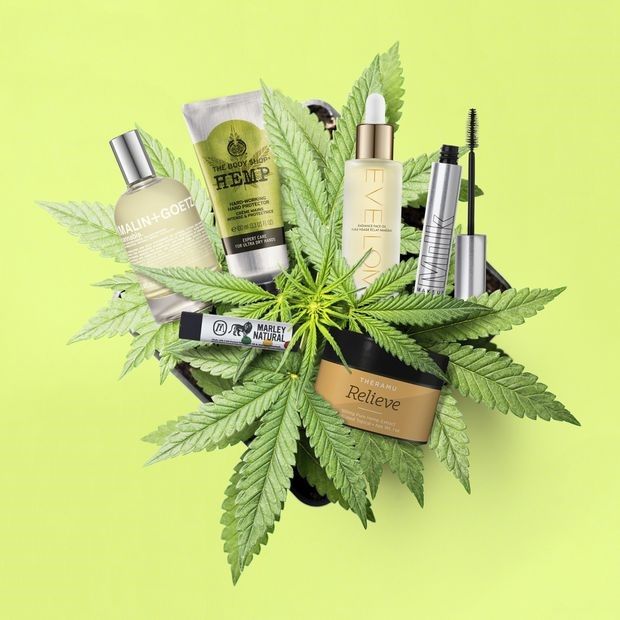
In the evolving world of cosmeceuticals, cannabis-derived actives such as THC (Δ9-tetrahydrocannabinol) and CBD (cannabidiol) have captured the attention of researchers, formulators, and skincare professionals. Both compounds interact with the skin’s endocannabinoid system (ECS)—a network that influences barrier function, inflammation, sebum production, and repair—but their scientific backing and cosmetic benefits differ significantly.
CBD: The More Established Compound
CBD currently holds the stronger foundation in dermatological research. Studies have demonstrated that CBD helps reduce sebocyte lipid production and inflammation, making it a promising ingredient for acne-prone and sensitive skin. Preliminary clinical results and small randomized trials suggest potential benefits in conditions such as psoriasis, eczema, and atopic dermatitis. Additionally, its antioxidant and anti-inflammatory properties may help support barrier repair, hydration, and protection from environmental stressors—attributes that align with consumer expectations for “soothing” or “calming” skincare products.
Recent investigations continue to validate CBD’s role in skincare. Controlled studies have shown measurable improvements in irritation and redness, while advanced formulations such as nano-CBD delivery systems are being explored to enhance skin penetration. Although more large-scale trials are still needed, CBD remains a key focus for product developers and dermatologists seeking naturally derived actives with measurable results.
Learn More: Breaking Down the CBD Spectrum: A Consumer’s Guide to Clarity
THC: The Emerging Contender
THC, while widely recognized for its psychoactive properties when ingested, has shown potential in topical applications for localized skin relief. Preclinical research indicates that THC possesses anti-inflammatory and analgesic properties, which could be useful for soothing reactive or inflamed skin. Certain case studies suggest cannabinoids containing THC may benefit individuals with chronic itch or pain-related skin conditions.
However, topical THC research remains limited, and unlike CBD, it faces greater regulatory restrictions. Even though non-transdermal topicals generally avoid systemic absorption—and therefore psychoactive effects—brands must still navigate complex labeling and compliance requirements. For this reason, THC-infused cosmetics are less common on the mainstream skincare market.
Safety and Formulation Standards
Both cannabinoids appear safe in topical form when formulated correctly, but quality and purity are critical. Reports of contact irritation or allergic reactions underline the need for standardized formulations, patch testing, and transparent ingredient labeling. The effectiveness of either compound depends on concentration, formulation type, and verified laboratory testing—factors that help ensure consistency and consumer trust.
The Final Takeaway
While both THC and CBD hold promise, CBD currently stands as the more substantiated option for skincare. It offers strong anti-inflammatory, antioxidant, and sebum-regulating benefits, making it ideal for calming, balancing, and barrier-strengthening formulations. THC, by contrast, may find its place in targeted or therapeutic applications pending further research and clearer regulatory pathways.
For consumers, choosing products that have undergone third-party testing and offer transparent labeling remains essential. As scientific understanding deepens, both cannabinoids may eventually play complementary roles in the next generation of cannabis-based skincare.